
Loved Dust
With a chinook roaring across the prairie — snow retreating, thermometres rising, soil drying — I’m reconsidering what it means to be dust in a universe made by Love, for Love.

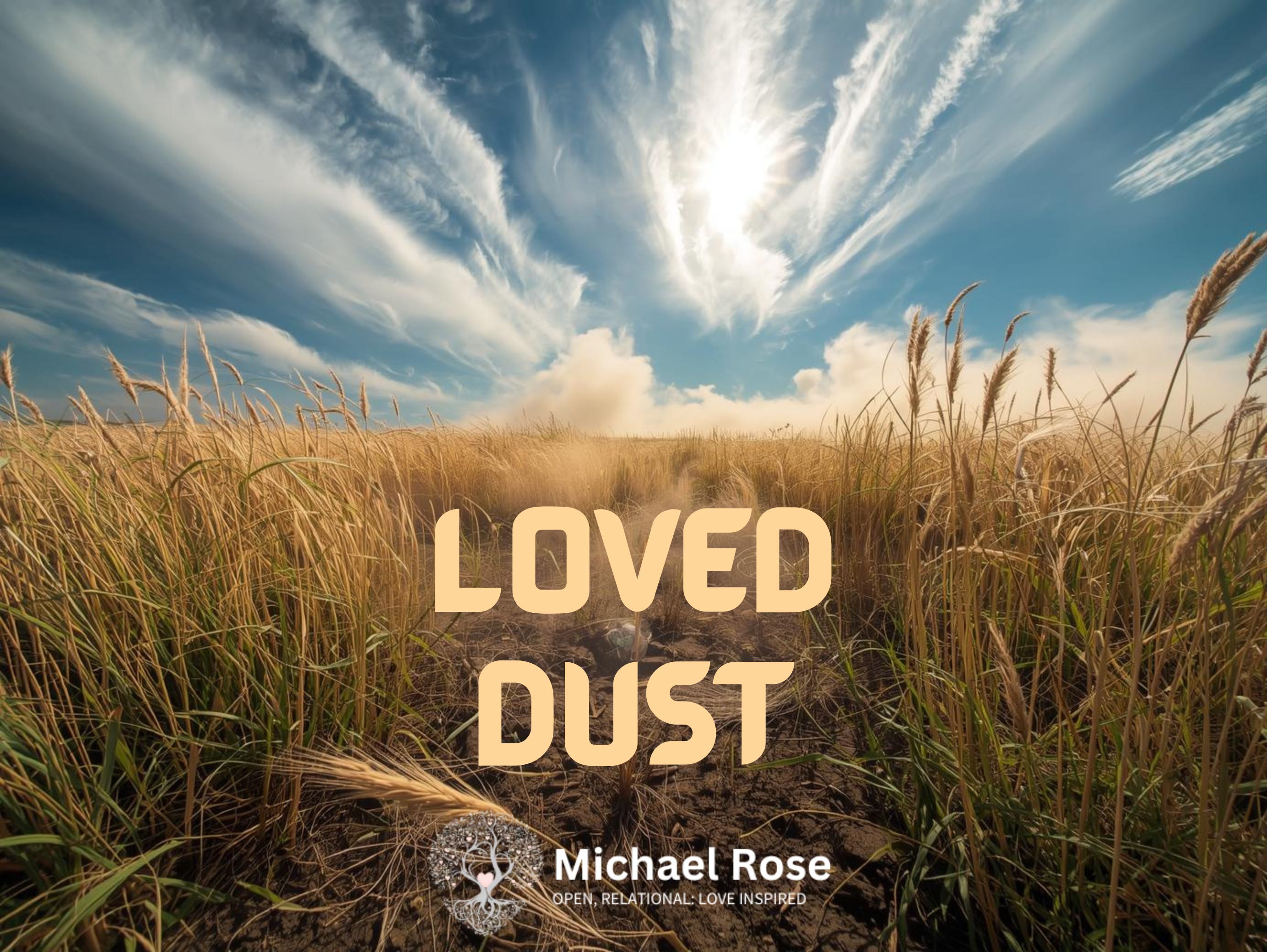
As I write this, a chinook is blowing hard through my prairie home — warm wind melting snow from the fields and pushing the thermometer upward with surprising insistence for late winter. The drifts are thinning along the fence lines. Beneath them, the soil is neither frozen nor ready. It is simply waiting.
There is something of Lent in that.
Not drama. Not catastrophe. Just exposure. The uncovering of ground that has always been there.
“From dust you came…”
Many of us learned to hear those words with a certain gravitas — as if they were a reminder of failure, or a quiet divine sigh over human disappointment. Dust, in that telling, feels small. Disposable. An indicator of how far we have fallen.
But in the Genesis poetry, dust appears before any fracture.
The human is shaped from soil long before the language of curse or toil enters the story. Earth and breath meet in that moment. The Creator kneels in ordinary ground and forms something capable of relationship.
Dust is not introduced as shame. It is introduced as origin.
When the narrative turns toward fracture, the shift is relational. Trust bends. The harmony between human beings and the soil from which they came feels different. The ground no longer yields with ease. Work carries weight. What once felt like gift feels resistant.
The text does not describe matter turning evil. It describes relationship straining.
Anyone who has worked land understands that kind of strain. So did the ancient community who first carried this story. They buried their dead. They endured drought and scarcity. They knew hunger and grief. The story does not announce mortality as news; it lingers with the ache of it — why is survival so damn hard, why goodness requires patience and sweat.
It is easy to let that ache slide into curse-thinking — to imagine that toil and death are divine retaliation. But the deeper current in the story feels different. Consequence is not the same as rejection. Strain is not the same as abandonment.
If there is an answer to suffering in the Christian imagination, it has never been alienation or annihilation. It has been love — steady, embodied, communal love. Love that forgives. Love that shares harvest. Love that sits beside hospital beds in February and plants Caragana shelterbelts, knowing wind will come again.
Death does not repair broken relationship. Love does.
To say we are dust is not to dismiss us. It is to locate us. We belong to soil and sea and star-forged carbon. We are participants in a long unfolding story in which matter has become capable of awareness, compassion, and choice. Creation is not a static paradise lost; it is an unfinished reality still becoming.
Human beings are not anomalies dropped into a perfect world and then ruining it. We are emerging creatures — capable of cruelty, yes, but also capable of extraordinary tenderness. History bears witness to both. Under the influence of love, something in us matures. We complexify. We learn, slowly, to move beyond scapegoating and tribal fear toward wider belonging.
Dust, then, is not evidence of worthlessness. It is the material of becoming.
Finitude is not failure. It is frame. Breath is limited, and because it is limited, it matters.
Perhaps Lent is not about rehearsing how far we have fallen, but about remembering where we stand — grounded, relational, unfinished, invited.
Resurrection, in that light, is not a return to an untouched Eden. It is confidence that Love continues its work within an evolving creation. Seeds enter soil and disappear from view, yet something in them persists. Participation in divine life does not evaporate when bodies return to the earth.
The chinook will pass. Snow will return. The soil will hold what is given to it.
And while breath is still moving in us, we are invited to live as what we already are — earth animated by Spirit, capable of cooperation with the Love that sustains all things.
If the universe is indeed made by Love and for Love, then even dust carries more future than we usually dare to imagine.
Sola Caritas,
𝞃Michael
Beautiful piece. “Dust is not introduced as shame. It is introduced as origin” really shifts the frame. We turned ash into humiliation, but Genesis presents soil as intimacy. The fracture is relational, not material. That’s a much healthier theology than curse-thinking. The chinook image works too. Exposure without drama. Soil waiting. That feels like Lent.
Beautiful! Paradise not yet found.
I remember those prairie chinooks from childhood. They felt like such a revolution.
Dirt is amazing according to what science tells us. Packed full of living beings of all kinds.
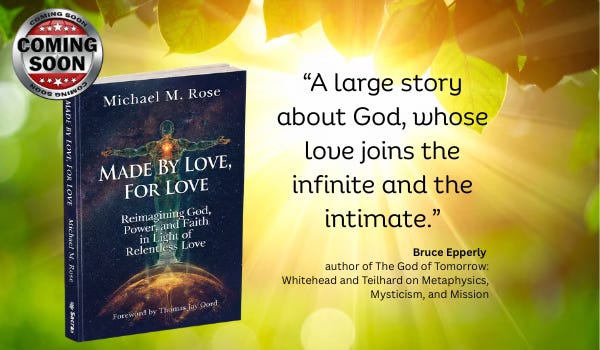
Your forthcoming book looks very intriguing. When will it be published?